
What Is ADHD Paralysis? 8 Ways to Manage It Effectively
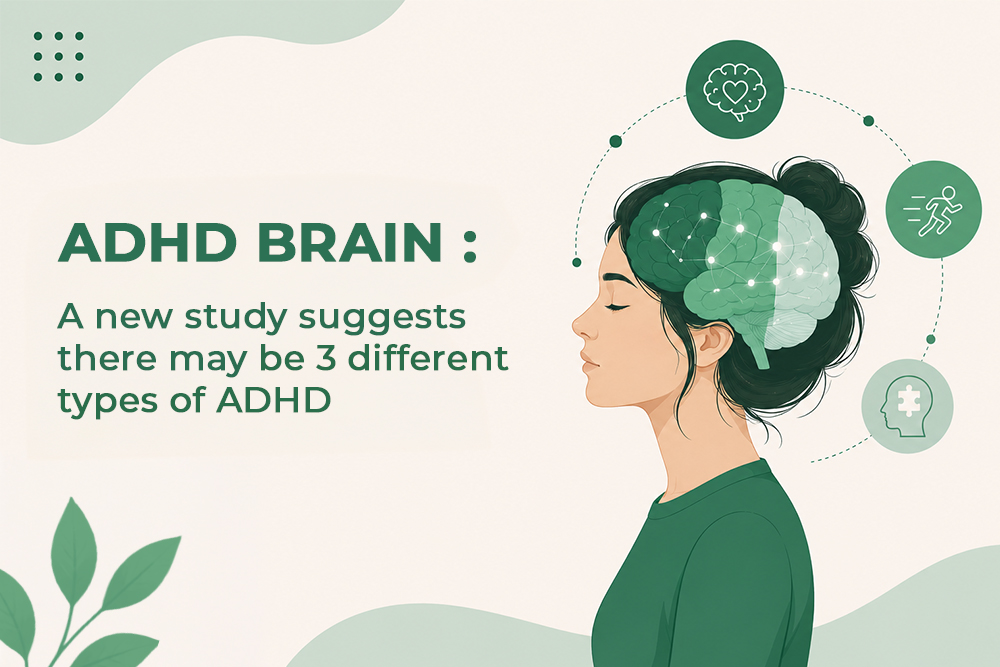
ADHD Brain: A New Study Suggests There May Be 3 Different Types of ADHD
For years, ADHD has often been understood through what we can see on the outside. Difficulty focusing. Constant fidgeting. Impulsive decisions. Emotional overwhelm.
But anyone living with ADHD knows that two people can carry the same diagnosis and still experience life very differently. One may appear calm but feel mentally scattered. Another may struggle with impulsivity, emotional outbursts, or physical restlessness.
Which raises an important question: What if the ADHD brain has never been just one kind of brain to begin with?
A new 2026 brain-imaging study is beginning to challenge exactly that idea, suggesting that ADHD may not be one uniform condition, but a group of related neurological patterns.
Why has ADHD often felt difficult to define
Before understanding what this new research found, it helps to understand why ADHD has sometimes felt confusing, even within clinical settings.
Two people may receive the same diagnosis, respond differently to medication, struggle with completely different challenges, or need entirely different systems to function well. This inconsistency has raised important questions for clinicians for years.
It is also why understanding the ADHD brain has remained one of the most important areas of modern neurodevelopmental research.
What this new study actually looked at
To explore these differences more closely, researchers published a large ADHD study in JAMA Psychiatry in early 2026.
Instead of starting with behavioral checklists alone, researchers analyzed structural MRI scans from over 1,100 children and adolescents, looking for patterns in how brain regions were organized and connected.
Rather than forcing everyone into one broad ADHD category, they allowed the brain data itself to reveal whether distinct neurological patterns existed. That shift changed everything.
This is where brain imaging changed the conversation
Traditional ADHD diagnosis has always been based largely on observed behavior, parent reports, teacher feedback, and clinical interviews. Those tools remain essential.
But by studying each ADHD brain scan individually, researchers were able to move beyond surface-level behaviors and look at deeper structural patterns across the brain.
What they found was something many clinicians have long suspected: ADHD may not always follow the same neurological pathway.
The study identified three distinct ADHD groups
After analyzing the imaging data, researchers found three recurring neurobiological clusters, closely aligned with different ADHD types already seen clinically.
These included:
- A severe combined pattern with emotional dysregulation
- A predominantly hyperactive or impulsive pattern
- A predominantly inattentive pattern
What makes this important is that these groups were identified through brain imaging first, not symptom labels.
Type 1: The emotionally overwhelmed ADHD brain
The first cluster showed the most widespread structural brain differences. This group struggled with both attention challenges and hyperactivity, but emotional dysregulation stood out most strongly.
Researchers found differences in regions linked to emotional control, including the medial prefrontal cortex and pallidum.
This suggests that the ADHD brain may sometimes struggle just as much with emotional regulation as with focus or impulsivity.
Type 2: The externally hyperactive presentation
The second group aligned more closely with the ADHD presentation most people traditionally recognize.
These individuals showed stronger patterns of physical restlessness, impulsive behavior, and difficulty slowing down.
This finding supports earlier ADHD research exploring how movement regulation and inhibitory control may work differently in some ADHD presentations.
Type 3: The quieter inattentive presentation
The third cluster appeared more internally distracted than externally disruptive.
These individuals often struggled with focus, working memory, task follow-through, and mental drift. Because these challenges are less visibly disruptive, they are often missed or misunderstood, especially in girls and later-diagnosed adults.
This is another reminder that the ADHD brain does not always look hyperactive from the outside.
Why these findings matter for treatment
Once researchers separated the groups, another important pattern emerged. Each cluster showed differences in neurotransmitter markers and brain organization, something earlier ADHD research has been trying to understand for years.
This newer ADHD research may also help explain why treatment often feels like trial and error. One person may respond well to ADHD coaching. Another to medication. Another may need stronger emotional regulation support.
If future studies continue validating these ADHD types, treatment could eventually become far more personalised.
What this does not mean yet
As exciting as these findings are, experts are also being cautious.
This study does not mean brain scans can currently diagnose ADHD on their own. Clinical interviews, developmental history, symptom patterns, and day-to-day functioning remain essential.
Even the most advanced ADHD brain scan is currently just one tool, not a replacement for diagnosis.
Moving from labels to understanding
For many people, ADHD has often felt like trying to fit into labels that only partially explain their experience.
But studies like this remind us that understanding the ADHD brain may eventually become less about forcing people into one diagnosis and more about understanding how each brain processes attention, emotion, and stimulation differently.
And for many people, that shift alone can feel deeply validating.
Conclusion
This new ADHD study offers an important step forward in how we understand ADHD. By identifying three possible neurobiological subtypes, researchers are beginning to show that ADHD may not be one condition expressed differently, but a group of related brain-based patterns.
More research is still needed before clinical practice changes, but one thing is becoming clearer: the future of the ADHD brain may be far more personal, precise, and human than ever before.
Ankita Jagtiani is a certified ADHD coach who works with ADHD adults navigating focus challenges, emotional overwhelm, and executive dysfunction. Through structured support and deeper self-understanding, she helps individuals build systems that work with their brains, not against them.