What Is ADHD Paralysis? 8 Ways to Manage It Effectively
What Is ADHD Paralysis? 8 Ways to Manage It Effectively
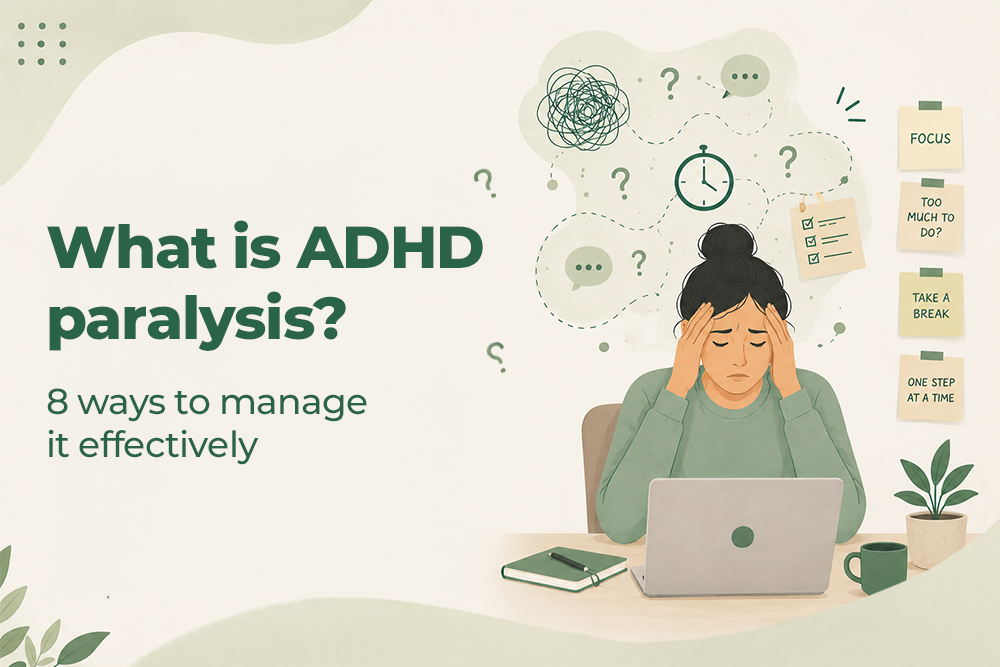
There are days when you know exactly what needs to get done and yet, nothing moves. The laptop is open. The to-do list is sitting right there. The deadlines are real. But somehow, your brain feels stuck between wanting to begin and being completely unable to start.
For many adults navigating ADHD, this experience is far more common than people realise. It often gets mistaken for laziness, procrastination, or poor discipline, when in reality, it may be something much deeper: ADHD paralysis.
This blog explores what ADHD paralysis actually is, why it happens, how it shows up in everyday life, and eight practical ways to work through it without shame or self-judgment.
When “I’ll do it later” is not really procrastination
Before understanding ADHD paralysis, it’s important to understand what makes it different from simply putting things off. Procrastination usually involves choosing to delay something. Paralysis feels very different. It often feels like your mind wants to act, but your body refuses to cooperate.
You may sit in front of a task for hours, thinking about it, planning it, even worrying about it, but still feeling unable to begin. That internal freeze is often linked to executive dysfunction, one of the core symptoms of ADHD that affects planning, task initiation, emotional regulation, and follow-through.
What does ADHD paralysis actually feel like?
Once people begin noticing this pattern, the next question is usually: What exactly is happening in my brain?
For some, it looks like staring at a simple email for 40 minutes. For others, it feels like mentally rehearsing a task over and over, but never being able to begin. Some describe it as a complete mental shutdown, where even basic decisions start feeling exhausting.
This is where ADHD paralysis becomes emotionally draining. You know what needs to happen, but you cannot access the mental energy to start.
Why does it often become more visible in adulthood
While these patterns may exist early on, they often become harder to ignore later in life. As responsibilities increase, so do the chances of being overwhelmed. Careers, finances, relationships, household responsibilities, and emotional expectations all begin competing for attention.
This is why many people start recognising ADHD symptoms in adults much later in life, often after years of silently coping. What once looked manageable in school or college can suddenly feel impossible under adult pressure.
The different ways ADHD paralysis can show up
Not everyone experiences ADHD paralysis in the same way. For some, it shows up before starting a task. For others, it appears in moments of decision-making or emotional overload.
It often falls into three common patterns:
- Task paralysis — knowing what to do but being unable to start
- Decision paralysis — overthinking every option until no action happens
- Mental shutdown — feeling so overloaded that the brain simply freezes
Many people navigating ADHD in adults notice themselves moving between all three depending on stress, environment, and emotional load.
What usually triggers it?
Once you understand how it shows up, it becomes easier to notice what triggers it. Common triggers include perfectionism, overstimulation, unclear priorities, emotional burnout, or simply having too many unfinished tasks competing for attention.
These patterns often overlap with signs of ADHD in adults, especially in people who have spent years masking their struggles or pushing through without support. And while ADHD paralysis can feel overwhelming in the moment, the right tools can make it feel far less impossible to work through.
8 Ways to Manage ADHD Paralysis Effectively
1. Start with the five-minute rule
When paralysis shows up, the goal is not to finish everything. The goal is to make starting feel less threatening.
One of the simplest ways to work through ADHD paralysis is to lower the pressure at the beginning. Instead of telling yourself to finish the task, commit to just five minutes.
Often, the hardest part is not the task itself. It’s crossing the mental barrier of starting.
2. Break the task until it feels manageable
Once starting feels possible, the next challenge is staying with the task without feeling overwhelmed.
Instead of “finish presentation,” break it down into smaller steps: open slides, write a headline, choose one image.
Breaking tasks into smaller actions can reduce cognitive resistance, especially when managing symptoms of ADHD linked to overwhelm.
3. Use short focus sprints
After reducing the size of the task, structure becomes important.
The Pomodoro technique often works well for people experiencing ADHD paralysis. Work for 20–25 minutes, then take a short break.
This creates enough urgency to stay engaged, without making the brain feel trapped or pressured.
4. Follow the Rule of 3
Another common reason paralysis builds is trying to do too much at once.
Instead of creating a list of 15 things, choose just three meaningful tasks for the day. Limiting options reduces decision fatigue and makes action feel more achievable.
5. Do a brain dump before planning
Sometimes paralysis has less to do with motivation and more to do with mental clutter.
Writing down everything — tasks, worries, reminders, random thoughts — can create immediate mental space. This often helps people recognise patterns connected to ADHD symptoms in adults that were previously mistaken for poor organisation or inconsistency.
6. Move your body before forcing your brain
When the mind feels frozen, the body can often create the momentum the brain is struggling to access.
A short walk, stretching, changing rooms, or even standing up for two minutes can help interrupt ADHD paralysis before it deepens. Movement often helps regulate attention, energy, and emotional state.
7. Replace self-criticism with self-awareness
For many adults, paralysis doesn’t just stop tasks. It also triggers guilt.
Years of missed deadlines, unfinished projects, or being misunderstood can create harsh self-talk. But what feels like failure is often your brain signalling overload.
This becomes easier to understand when you start recognising symptoms of ADHD as neurological patterns rather than personal flaws.
8. Build long-term systems with support
Quick tools can help in the moment, but lasting change usually comes from understanding your patterns more deeply.
Coaching, therapy, or structured support can help build systems that reduce overwhelm before it turns into ADHD paralysis. The goal is not to force productivity. The goal is to make daily life feel less exhausting.
Moving from freeze to self-trust
Over time, untreated paralysis can quietly affect confidence, relationships, and self-belief. Tasks begin feeling heavier. Decisions feel riskier. Everyday routines start feeling personal.
But understanding changes everything. Once you begin recognising ADHD in adults with clarity instead of shame, you stop fighting your brain and start learning how to work with it.
Conclusion
ADHD paralysis is not laziness, weakness, or lack of discipline. It is often the result of executive dysfunction, overwhelm, and years of misunderstanding how your brain responds to pressure.
With the right awareness, supportive tools, and a deeper understanding of signs of ADHD in adults, it becomes possible to move from freeze to action, and from self-doubt to self-trust.
Ankita Jagtiani is a certified ADHD coach who works with adults navigating overwhelm, executive dysfunction, and emotional burnout. Through structured support, she helps individuals understand their patterns, build sustainable systems, and move from confusion to clarity.