
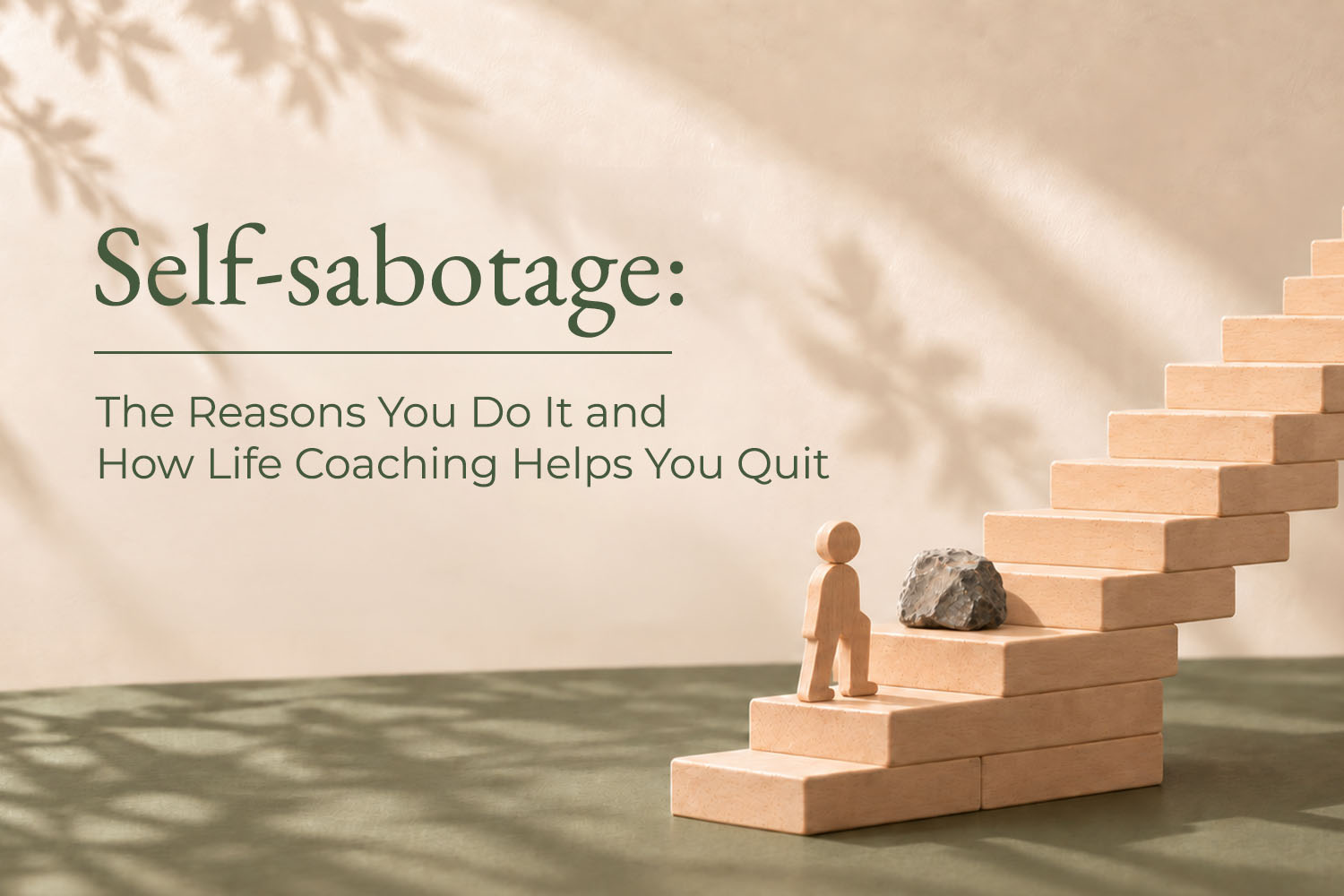
Self sabotage: The Reasons You Do It and How Life Coaching Helps You Quit
Sometimes, we work really hard towards something we want, and then, just when it starts to feel within reach, we pull away. Maybe you have been thinking about applying for a new role, but keep finding reasons to delay applying. Maybe you want to build a healthier routine, but struggle to get started. From the outside, it can look like a lack of motivation or self discipline. But self sabotage is rarely that simple.
Sometimes, there is a reason a particular pattern feels easier to repeat, even when you know it is not helping you move towards what you want. Understanding that reason can be a useful place to begin. This blog looks at what may sit behind self sabotage and how life coaching can help you work through these patterns.
Why self sabotage can be difficult to recognise
The meaning of self sabotage is often found in the gap between what you want and how you end up behaving. You may want to apply for a new role but keep putting it off. You may want to get fit but stay up late scrolling and find it difficult to follow the workout you had planned.
Often, self sabotaging behaviour starts small: putting something off, choosing the easier option, or telling yourself you will deal with it tomorrow. Sometimes, an inner critic drives these decisions. It focuses on what could go wrong, whether you will get it right, or what someone else might think. In that situation, avoiding the task can provide a little relief, even if it might lead to more stress later.
Why you self-sabotage
Why you may self sabotage does not have one simple answer. Fear of failure can make it easier to hold back than risk getting something wrong. Fear of success can work in a similar way: a promotion, relationship, or new opportunity may bring responsibilities or expectations that feel unfamiliar.
Past experiences can shape these responses too. Stress, uncertainty, or a difficult experience may make you more cautious in similar situations. Instead of judging the pattern, notice what happens just before you pull away, what you are feeling, and what avoiding it helps you avoid.
Common self sabotage habits
Some self sabotage habits are easy to miss. Procrastination, perfectionism, overcommitting, avoiding difficult conversations, or second-guessing decisions can all become ways of avoiding discomfort.
Ask yourself: What am I trying to avoid right now? Procrastination may help you avoid the fear of being judged, while perfectionism can make uncertainty feel more manageable. Understanding what the behaviour is helping you avoid can make it easier to change the response.
How self-sabotage affects work and relationships
The effects of self sabotage are not always obvious at first.
At work, you may keep putting off a difficult task, hesitate to take on a new responsibility, or stay in a role even when you have started thinking about a change. In relationships, you may find it difficult to have a conversation that feels uncomfortable or allow someone to get closer.
There can be a quieter cost too. Repeatedly leaving things until the last minute can keep you in a cycle of stress. Over time, that can affect how you feel about your own ability to handle things. If you are looking for ways to stop self sabotaging, it would be helpful to understand what the pattern is helping you to avoid. It may have helped you avoid discomfort, manage uncertainty, or protect yourself from the possibility of getting something wrong. Understanding that can be a more useful starting point for how to stop self sabotaging than simply trying to force yourself to behave differently.
How life coaching helps
Life coaching can help you understand the gap between what you want and what may be getting in the way of your goal. A coach can help you identify the thoughts and patterns behind procrastination, avoidance, or losing momentum, and work with you to find practical steps that feel realistic and are adapted according to your situation. Regular check-ins can also help you stay accountable to your goals.
This can make overcoming self sabotaging patterns less about forcing change and more about understanding what is getting in the way. This can make overcoming self sabotaging patterns less about forcing yourself to act differently and more about building responses that support the goals you want to move towards.
Breaking the pattern
Changing a familiar pattern takes time. There may be days when you notice yourself slipping back into an old response. That does not mean you have failed. It gives you another opportunity to notice what happened and understand what you might need next time.
Self sabotage is not a character flaw. It is a pattern, and patterns can be understood. Once you begin to recognise what sits behind your choices, you may find that you have more room to respond differently.
You do not have to change everything at once. Sometimes, noticing one familiar response and choosing a slightly different one is where the shift begins.
Ankita Jagtiani Dadachanji is a certified coach who works with adults navigating self-doubt, recurring patterns, and challenges with follow-through. Through personalised coaching, she helps individuals build self-awareness, gain clarity, and develop practical strategies that support meaningful progress in their personal and professional lives.