
ADHD Testing: Understanding the QbCheck Tool for Remote Symptom Measurement
ADHD Testing: Understanding the QbCheck Tool for Remote Symptom Measurement
For many adults exploring ADHD, the journey often begins with confusion. Difficulty focusing, feeling mentally restless, or struggling with follow-through can raise questions, but getting clarity isn’t always straightforward. Conversations around the diagnostic process can feel overwhelming, especially when the process seems clinical, time-consuming, or unclear.
This blog explores one part of that process, i.e. understanding how tools like QbCheck work, what they measure, and how they fit into a broader, more holistic approach to identifying ADHD.
Why ADHD testing can feel complicated
Understanding ADHD is rarely about ticking a single box. Many adults notice patterns over time, but translating those patterns into clarity often requires structured evaluation. This is where conversations around ADHD symptoms become important, as they form the foundation for any meaningful assessment.
However, traditional methods often rely heavily on self-reporting or observation, which can sometimes feel subjective or incomplete. This is where newer tools aim to add another layer of insight, alongside what may already feel like an informal ADHD symptoms test that people try to make sense of on their own.
What is QbCheck, and how does it work?
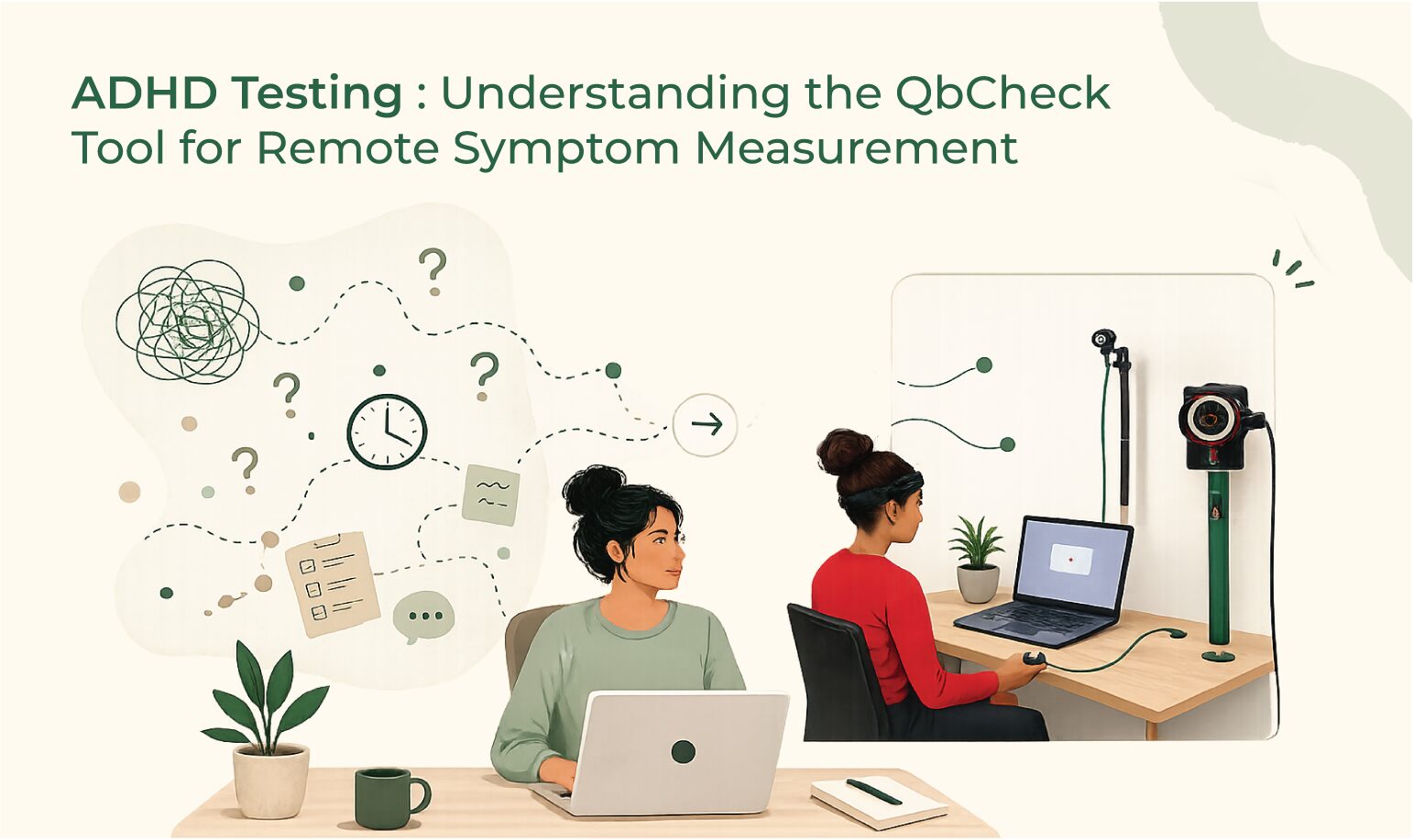
QbCheck is an FDA-cleared, CE-marked, online, computer-based tool designed to measure the core areas commonly associated with ADHD — attention, impulsivity, and activity levels. It is typically completed on a laptop with a webcam and takes about 15 to 20 minutes.
During the test, individuals respond to simple on-screen prompts, such as pressing a key when a specific symbol appears. At the same time, the system tracks movement through the webcam with high precision, capturing patterns related to restlessness and focus.
This form of ADHD testing offers a more structured and standardised way of observing behaviour in real time, rather than relying only on memory or perception.
What makes QbCheck different from other tools?
One of the key differences with QbCheck is that it combines task performance with physical movement tracking. This allows clinicians to observe not just how someone responds, but also how consistently they are able to sustain attention over time.
The data is compiled into detailed reports, including a Total Symptom Score and comparisons with age- and sex-matched groups, helping create a clearer and more contextual understanding of patterns.
While it may feel similar to an ADHD screening test, it goes a step further by offering objective data beyond what a basic ADHD symptoms test might capture through self-report alone.
The role of remote assessment tools
One of the biggest shifts in recent years has been the ability to complete certain assessments remotely. QbCheck can be taken from home, which reduces the need for travel and makes the process more accessible for many individuals.
For those who may already feel overwhelmed by clinical settings, this approach allows them to engage with ADHD testing in a more comfortable and familiar environment, which can sometimes lead to more natural responses during the task.
Why tools like QbCheck are only one part of the process
While QbCheck provides valuable data, it is important to understand that it is not a standalone diagnosis. It works best when combined with clinical interviews, personal history, and professional evaluation.
An ADHD screening test or digital assessment can highlight patterns, but diagnosis requires context. Factors such as environment, emotional health, and long-term behavioural history all play a role in understanding the full picture.
This balance is important because while tools can reduce bias, they cannot replace human understanding.
How QbCheck supports ADHD treatment over time
Beyond diagnosis, tools like QbCheck are also used to track progress. By comparing results over time, clinicians can better understand how someone is responding to support strategies, whether that includes therapy, coaching, or medication.
This makes it a useful part of ongoing ADHD treatment, as it allows both the individual and the clinician to see changes in attention, impulsivity, or activity levels in a more measurable way.
Over time, this can support more informed decisions within ADHD treatment, especially when adjustments need to be made based on what is actually working.
Moving from confusion to clarity
For many adults, the goal of assessment is not just diagnosis, but understanding. Tools like QbCheck can help make patterns more visible, but they are most effective when used as part of a broader, supportive process. ADHD symptoms can often feel inconsistent or difficult to explain, which is why structured tools can bring a sense of clarity to what otherwise feels scattered.
Recognising patterns through structured tools, combined with professional guidance, allows individuals to move away from self-doubt and toward clarity that feels grounded and actionable.
Conclusion
ADHD is complex, and understanding it requires more than a single test or checklist. While tools like QbCheck make the assessment process more accessible and structured, they are only one part of a larger process that includes conversation, context, and care.
If you’re considering exploring tools like QbCheck, the most helpful next step is to do so with a qualified professional who can guide you through both the results and what they mean for you.
When used thoughtfully, alongside approaches like therapy, coaching, and personalised support, these tools can help individuals better understand how their attention works and what support they need.
Ankita Jagtiani is a certified ADHD coach who works with adults navigating ADHD, diagnosis, and daily challenges with focus and regulation. Through ADHD coaching, she helps individuals build clarity, structure, and sustainable systems that support how their brains naturally function.